
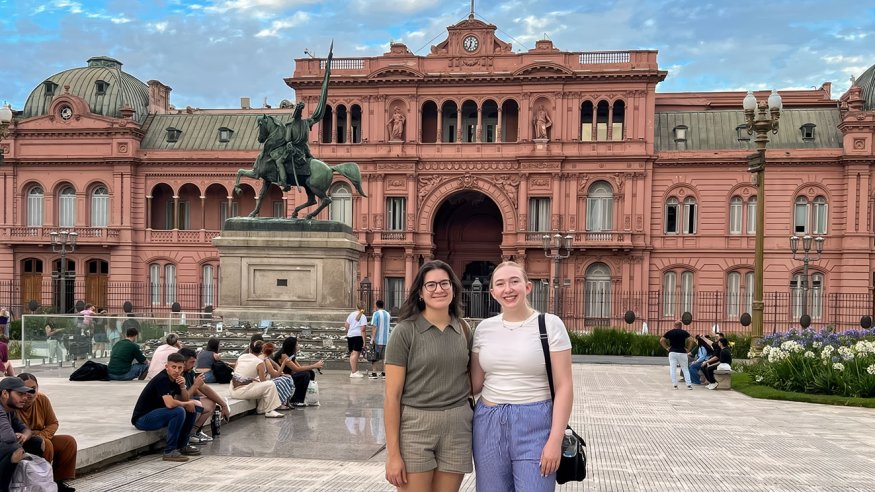
Culture of Remembrance
Ohio Wesleyan Students Travel to Argentina to Study Its Legacy of Military Dictatorship
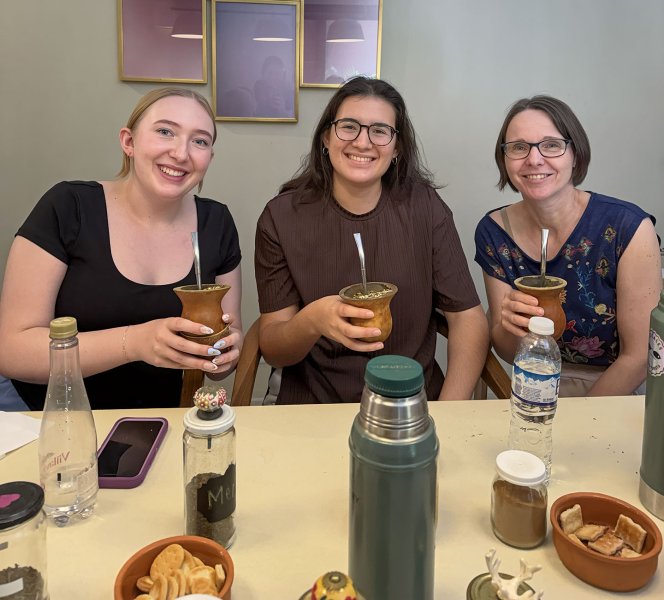
Name: Lilly Colbeck '27
Hometown: Avon, Ohio
High School: Avon High School
Majors: History, Spanish, and Business Administration
Minor: Latin American Studies
Name: Elisabeth Johnston '27
Hometown: Defiance, Ohio
High School: Defiance High School
Majors: English Literature and Spanish
Minor: History
OWU Connection Experience: Using an OWU Connection grant to travel to Buenos Aires to expand the learning they shared during a directed reading course
Colbeck and Johnston used their "Theory-to-Practice Grant" to explore the Argentine dictatorship of the '70s and '80s and the "culture of remembrance" created in response. They traveled in December with Andrea Colvin, Ph.D., associate professor of World Languages & Cultures and director of the University's Latin American and Latine Studies Program.
Colvin organized and guided the trip, Colbeck said, and "her expertise and support were invaluable throughout the process, allowing for deep learning and reflection."
A Meaningful Experience
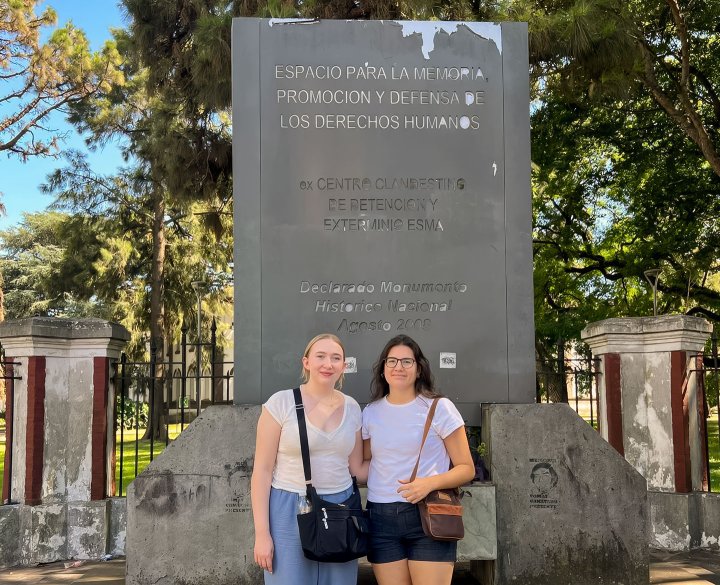
Colbeck: "This experience was meaningful for me because it allowed me to expand upon my studies tangibly. The research of our directed readings became even more impactful when we were able to see the sites where the dictatorship occurred, and how it has affected both those who experienced it and those who came after."
Johnston: "The history and culture of Latin America are important to me because of my family's Mexican heritage. Argentina is also particularly special to me, as I will be spending a semester abroad there. Learning the history, culture, and experiences of Argentinians in such a personal way has prepared me to not simply study in Buenos Aires, but to live there and connect with the culture in a more meaningful way."
Humanizing History
Colbeck: "My favorite part of the experience was our visit to the Parque de la Memoria. The park is a public memorial to all the victims of the dictatorship. Between 1976 and 1983, an estimated 30,000 Argentines were 'disappeared' by the government for supposedly being political subversives. The park features long stone walls inscribed with the names and ages of all known victims. There is also a free, small museum on the site that holds exhibits relating to the events of the dictatorship to promote education and remembrance. The experience was deeply emotional, and humanized the victims more than any of our studies could have on their own."
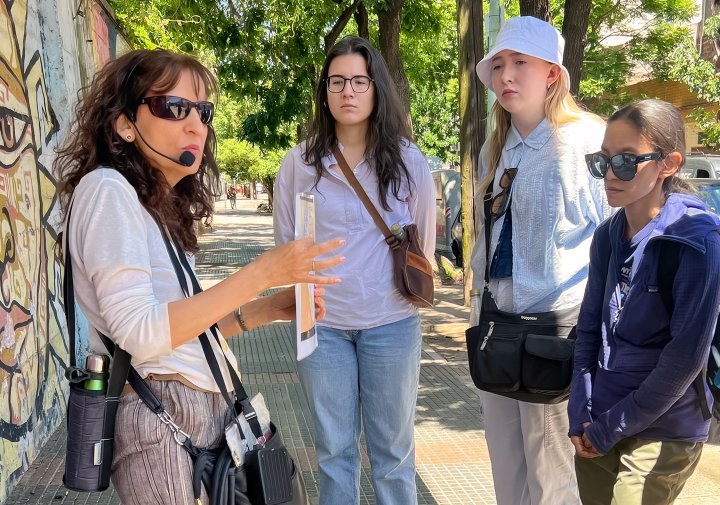
Johnston: "We were able to meet with Juan Pablo Moyano, who was a victim of the military dictatorship. He was abducted with his parents when he was only 2 years old, and was located by the organization Abuelas de Plaza de Mayo when he was 7. We read many stories about people in situations like his, and watched a couple of films. To be able to sit down and talk to Juan Pablo was such a unique and special experience. It humanized the history we had studied."
Experiences like this matter because they humanize our academic disciplines; we are able to learn about other cultures on their terms and strengthen our human connections.
Lessons Learned
Colbeck: "Through this experience, I learned more about the connection between classroom content (history, language, culture) and its real-world application. We were able to draw connections that would have otherwise been difficult to do in the classroom, amplified by our daily experiences in the city of Buenos Aires.
"As someone considering museum work, it was fascinating to see the way that historical remembrance is a part of everyday Argentine culture, and the efforts that have been made to properly memorialize the dictatorship and its victims. Experiences like this matter because they humanize our academic disciplines; we are able to learn about other cultures on their terms and strengthen our human connections."
Johnston: "We studied Argentina's Culture of Remembrance thoroughly, so that most of the information we heard in tours and museums was not new. However, hearing unique, personal stories and walking in the spaces where the events we had studied took place was eye-opening. It added a human element to all of the facts we had learned. This experience taught me that regardless of how many "facts" we know about countries, histories, and people, the value of humanity and personal connection in understanding the world outside of ourselves is priceless."
Campus Involvements
Colbeck: "Outside of the classroom, I work at the Ross Art Museum as the curatorial assistant intern, as well as an RA for first-year students. I am on the History Student Board, the WLC Student Board, and the Honors Student Board. Finally, I have been a member of the Hall Council for three years and the Dean's Council for one."
Johnston: "I'm a peer tutor for the Writing Center and Spanish."
Why Ohio Wesleyan?
Colbeck: "I chose to attend Ohio Wesleyan because of the generous scholarships I received, as well as the welcoming community I experienced during my visits and interviews here."
Johnston: "One of my high school English teachers, who is an Ohio Wesleyan alum, encouraged me to apply and recommended the English program."
Plans After Graduation
Colbeck: "My tentative plan after graduation is to attend graduate school for Museum Studies, before working in an art/history institution (museum, archive, etc.)"
Johnston: "I hope to teach either English or Spanish at the high school level. I am very grateful for the willingness of my professors to offer mentorship and advice for my future plans."