
Julia Prince Hatfield '06
Director of Annual Giving
Grateful Hearts
In 1926, Herman "Rusty" Shipps, Class of 1913, saw a future in which OWU's success wasn't tied to a few wealthy benefactors but was fueled by the collective power of its alumni. Alongside other Bishops, including Branch Rickey, Class of 1904, Rusty pioneered one of Ohio's first annual funds, inviting every Bishop to give "in any convenient amount."
That simple invitation sparked a 100-year tradition of transformation. From the classroom to the playing field, your annual gifts are the foundation of the OWU experience by supporting scholarships, faculty excellence, Battling Bishop athletics, internships, research, performing and fine arts, extracurriculars, and much more.
As we reflect on a century of impact, one thing remains clear: your continued support is the cornerstone of Ohio Wesleyan's success. For 100 years, the collective generosity of Ohio Wesleyan donors has fueled the dreams of 39,009 graduates—and counting!
As your support has scaled, so has our ambition. From an expanding student body to the global impact of our alumni, your giving builds the OWU legacy. Join us as we celebrate an incredible century of giving and explore the history, milestones, and power of the OWU community.
Here's to another 100 years of excellence—made possible by you!
Mark Shipps '70
Former Vice President for University Relations and Special Assistant to the President
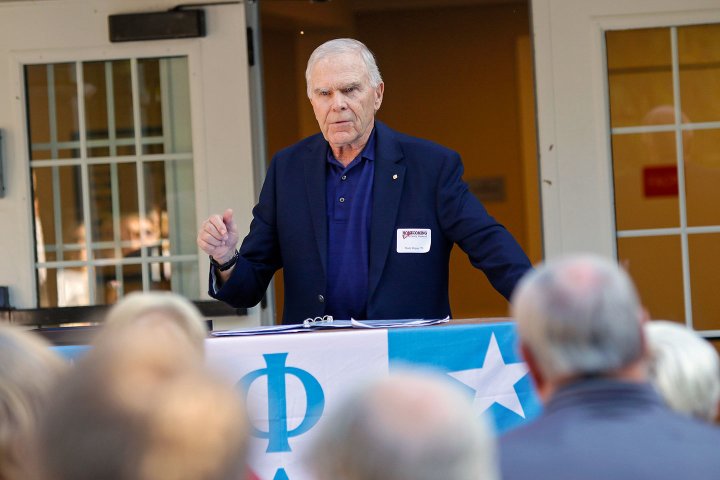
A Century of Impact
When we talk about the Ohio Wesleyan Fund turning 100, we're not just marking time; we're recognizing a legacy. A mindset. A commitment that carries generations of Bishops forward. To understand where that legacy began, we turned to someone who has lived it from both a personal and professional perspective: Mark Shipps '70.
For Mark, the story of the OWU Fund is deeply personal. He doesn't speak of the Ohio Wesleyan Fund the way you might expect a former vice president for university relations to speak about it. He doesn't lead with statistics or milestones. Mark leads with his grandfather. "It's hard to think about my grandfather without thinking about Ohio Wesleyan," he says. "He really exemplified the university to me."
That grandfather is Rusty Shipps, Class of 1913, and if you spend any time in Delaware, Ohio, you start to understand what Mark means. Rusty wasn't just an OWU employee. He was, in many ways, the connection between the institution and everyone around it.
Where It All Began
In the early 20th century, higher education looked very different. Fundraising, as we know it, didn't exist in a structured way. Colleges relied primarily on individual gifts, without a consistent or organized system to sustain long-term needs.
Rusty saw something different.
After learning about the emerging concept of an "annual fund" at peer institutions, he brought the idea to Ohio Wesleyan, introducing a model to provide reliable, repeatable support year after year. It was a simple idea, but it forever shaped the OWU experience.
What began as a new approach to fundraising quickly became something more: a foundational piece of how OWU operates, connects, and grows. "Rusty was a pioneer," Mark reflects. "He took an idea and built it into something that became ingrained in the culture of Ohio Wesleyan."
For Rusty, this work was a calling. He served the university for nearly four decades, working across roles that today would span multiple offices. Fundraising, public relations, admission, alumni engagement, he did it all. But what made his impact lasting wasn't just what he built. It was how he lived. "His life was Ohio Wesleyan," Mark says. "Delaware was Ohio Wesleyan, and Ohio Wesleyan was Delaware."
That deep integration, among the institution, alumni, and community, helped establish something that continues to define the Bishop experience: a sense of shared responsibility. From the very beginning, the purpose of the Ohio Wesleyan Fund was clear—tuition alone would never be enough. Then, just as now, there was a gap between what it cost to deliver an Ohio Wesleyan education and what students paid. The OWU Fund became the bridge, ensuring that opportunity, access, and excellence could continue.
That truth hasn't changed in 100 years.
Carrying the Legacy Forward
For Mark, understanding the legacy didn't happen all at once. It grew over time, first through his relationship with his grandfather, and later through his own involvement as an alumnus, volunteer, trustee, and ultimately vice president for university relations, the same role Rusty once held. "It became very clear to me," Mark says, "that fundraising fills the gap. It's essential to the institution."
Today, that work continues, not just in advancement offices, but across campus. In his current role as an OWU Alumni Partner with Career Connection, Mark sees firsthand how the impact of giving shows up in students' lives. From internships and career advising to alumni mentorship and networking opportunities, the support provided through the OWU Fund reaches far beyond the classroom.
"It's another example of the value of an OWU education," he explains. "You see students come in needing guidance, and then leave prepared for what's next." Those connections don't end at graduation. "They come back," Mark says. "You build relationships with students, and those relationships continue. That's been one of the most rewarding parts."
While the foundation remains the same, the way we engage alumni and supporters has evolved. Over the years, giving has expanded beyond annual contributions to include comprehensive and capital campaigns, planned giving, and foundation support. The scale has grown. The strategies have adapted. But the core challenge, and opportunity, remain: How do we continue to inspire connection?
"There's a lot more asking today," Mark notes. "And people are asked for support everywhere. So the key is keeping it fresh, meaningful, and focused on the individual."
At its heart, that means telling the story of impact, clearly and authentically. It means helping alumni understand not just that they are needed, but why. Because the truth is, every Bishop's experience is made possible, in part, by those who came before them.
Today, Rusty Shipps' legacy is visible across campus, not just in a portrait on the wall, but in the growth of the institution itself. What was once a small, one-person operation has become a comprehensive effort involving teams of professionals, volunteers, and alumni worldwide. And still, the purpose remains the same: to ensure that Ohio Wesleyan continues to thrive, provide opportunities for students, and strengthen the connections that define us as Bishops.
As we celebrate 100 years of the Ohio Wesleyan Fund, we're honoring the past and looking ahead to the next generation of Bishops, the relationships they will build, and the impact they will make. "They all excite me," Mark says. "Watching students grow, succeed, and hopefully understand the importance of giving back, that's the most gratifying part."
And if Rusty could see Ohio Wesleyan today? "I think he would feel gratified," Mark reflects. "He had a good idea. He nurtured it. And it's grown."
Robert "Bob" Holm '60
Former Vice President for University Relations, Co-Chair OWU Lifelong Learning Institute
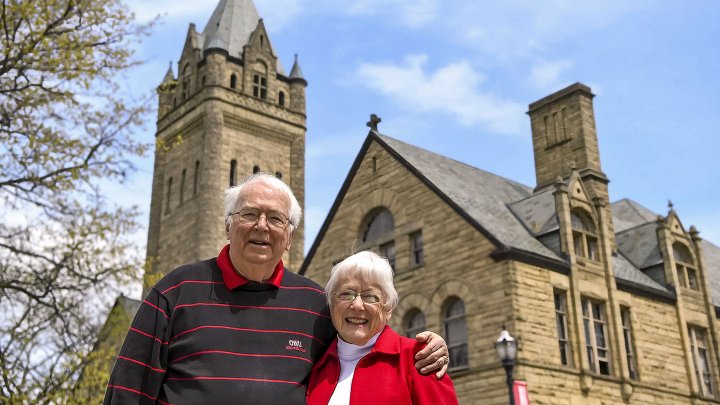
Building the Foundation of Impact: A 40-Year Journey
When I graduated from Ohio Wesleyan in 1960, the Annual Fund goal stood at a modest $200,000. My mentor at the time insisted it would never increase. Decades later, as vice president for university relations, I tossed balloons out the alumni office window to celebrate our first $1 million milestone. When I retired in 2003, the Annual Fund had transformed from a simple fund for faculty salaries and student scholarships into a multi-million-dollar engine of opportunity.
OWU's Annual Fund focused not on fundraising mechanics but on the enduring power of long-term, personal relationships. Throughout my 40-year tenure, I fostered trust with our alumni. This philosophy of sincere connection became clear during the 1986 Trustee Challenge, where mutual respect with a trustee allowed me to make a bold ask that doubled his gift and sparked a 50 percent surge in support for OWU's Annual Fund.
Relationships remained at the heart of my work during capital campaigns as well. By truly hearing an alum's vision rather than just citing needs, I was able to transition a modest $300 donor into a $5 million partner in our mission. Today, campus buildings and OWU's growth are more than milestones; they represent meaningful relationships.
My wife, Mary '60, and I continue to nurture lasting connections through the Lifelong Learning Institute, honoring a legacy of lifelong bonds and personal growth that defines our journey with Ohio Wesleyan.
Marvin Elias '66
Celebrated a 60th Reunion in May!
A Flashback in Time: Marvin Elias '66 Reflects on Ohio Wesleyan's Annual Fund at the Time of Its 50th Anniversary
In 1966, Ohio Wesleyan's morning ritual had a distinct cadence. For Marvin Elias, it started with a nice breakfast of eggs, bacon, and homemade fries in Welch Hall, a relatively new dorm. Students walked past Gray Chapel on the way to morning classes at 9 a.m. He described it as a good life, a whole one. And it unfolded against a backdrop unlike anything OWU students had experienced before.
The OWU Fund was gradually approaching its 50th anniversary when Marvin was a student. Over the summer break, current students had the chance to interact with returning alumni during reunion weekends. "Meeting those alumni left an impression," Marvin recalls. He remembers alumni from the Class of 1916 staying with him to celebrate their 50th reunion. "They shared journeys to the Olentangy, football games—all before the fraternity houses on campus as we know them today were built."
Marvin distinctly remembers how proud the alumni were to have an education. "They had a very Wesleyan attitude, that since they got their education, they were going to use it." This was Marvin's first glimpse into the larger inner workings of the OWU alumni network.
That gap between student life and alumni identity would close only with time for Marvin and his classmates. In 1966, a lot was happening off campus that captured people's attention.
Perhaps more subtly than on larger campuses, OWU was affected by the Vietnam War, which hovered over the country's psyche. In 1965, troop buildups started, and some OWU students participated in local protests and organizational meetings. However, Marvin recalls that the campus reaction was more conversation-focused than combative. The African Students Association and the Congress on Race Relations directed the energy of the time into deliberate, neighborhood-oriented discourse. "Activism remained peaceful," he says. "There was real awareness, but also real restraint."
The social and intellectual culture of campus life burned brilliantly at its core, while the political atmosphere simmered at its periphery. Sororities and fraternities had a significant role. Football Saturdays attracted loyal audiences. Additionally, nights frequently brought together a fairly diverse group of students, many of whom were from abroad, for lengthy, meandering chats and shared meals.
For Marvin, nothing better encapsulated the spirit of that time than Dr. Daniel E. Anderson's philosophy courses. Students were intellectually challenged in three-hour classes, which invariably spilled over into the pubs on Sandusky Street and North Church Street, where debates and discussions went on for hours. "These experiences weren't just academic," Marvin muses. "They influenced our growth, how we challenged one another, and how we thought."
As a student on campus in the late '60s, Marvin thought about philosophy seminars, football games, and late nights on Sandusky Street, not about the mechanics of alumni giving. What he knows now is that the OWU Fund was always working in the background during those years, creating and sustaining possibilities. Marvin's job is simply to return the favor, so that the next generation of students can also walk past Gray Chapel on a Tuesday morning, focusing on their studies and friendships.
Donna Burtch '79
Former Assistant Director and Director of Annual Giving
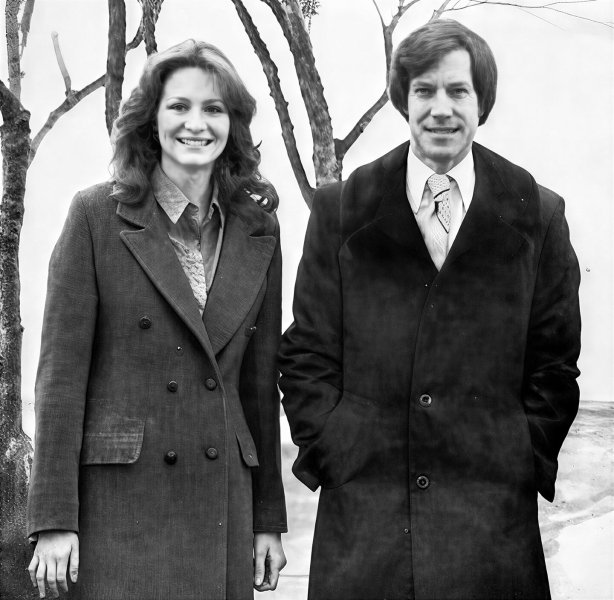
From Data to Connection: Redefining Impact Through the Ohio Wesleyan Fund
When Donna Burtch '79 led annual giving at Ohio Wesleyan, the tools of the trade were humble: the team shared "dumb monitors" on wheels, maintained paperbased records, and sent thank-you notes dictated and transcribed in a completely different campus office. She had no idea that she was at the start of a revolution that would change Ohio Wesleyan's relationship with its alumni for future generations.
"The shift was huge," Donna remembers. What previously took days or longer became far more efficient as technology developed. Previously delayed information became instantaneous, giving individuals involved in donor interaction additional authority. "This evolution substantially increased our ability to comprehend alumni needs, making our efforts more timely and impactful."
Early outreach was simple but direct: widely distributed direct mail and straightforward segmentation to separate previous donors from those who had not yet donated. Though it left a lot on the table, it did work. The environment was completely altered by the time Donna returned to OWU later in her career, with computers on every desk and data at her fingertips. The opportunities also shifted. Donors could now be separated into categories based on their tendencies, giving history, and even the season in which they were most likely to donate. Engagement aligned with donors' true identities and interests replaced generalized outreach.
Nevertheless, Donna emphasizes that increased data did not necessarily translate into improved fundraising. "One challenge was not over-measuring everything," she said. There was a strong urge to monitor every aspect as information became more widely available. She recognized that maintaining focus on what really mattered was the key to perseverance in this area of work, and now mass data. "Impact" changed from a volume issue to a relationship issue. "An OWU giving experience should reflect the value of an OWU education: something lasting and meaningful." Donna is confident that the foundation of the work remained unchanged despite all the technological advancements she saw and supported. "We made a conscious effort to keep things personal," she says. Through phone calls, volunteer networks, and real human touch, the OWU team purposefully resisted the tendency for technology to turn the process into a transaction.
Perhaps the greatest takeaway of Donna's time at Ohio Wesleyan was the balance: embracing innovation without losing the human touch. She sees the OWU Fund's future as preserving that same discipline as it enters its second century: staying in step with the university's changing demands, learning from colleagues in the field, keeping an open mind to new digital tactics, and never losing sight of the fundamentals. "Supporting what OWU needs to thrive," she says. "That's what it's always been about."
Lindsey Gale '98
Former OWU Associate Director of Major Gifts and Director of Donor Relations
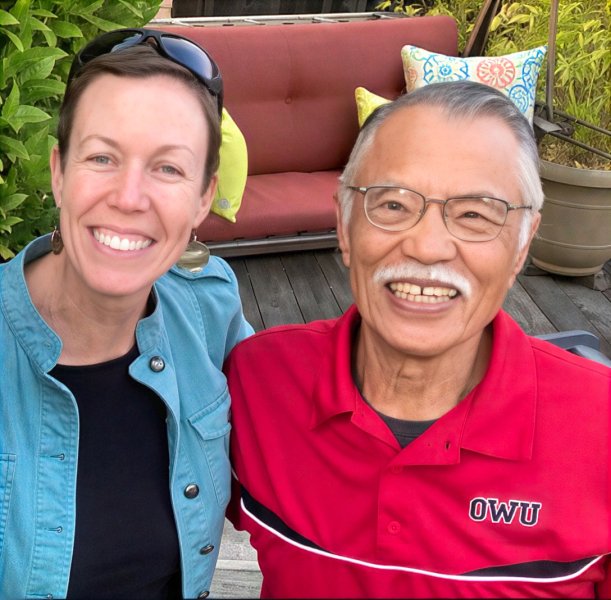
Impact Through Relationships and Lifelong Engagement
My OWU experience transformed me. I participated as a student, especially in my sorority, Kappa Kappa Gamma. My involvement in the organization provided the foundation for my career success. I served as recruitment chair for my sorority and oversaw recruitment for the entire university through Panhel. As a student, I formed meaningful connections by meeting people in those organizations and building friendships.
A few years after graduation, my Kappa advisor, Alissa Comella, encouraged me to become an annual giving volunteer for my class. Her leadership as OWU's director of annual giving inspired me to join and rapidly expand my volunteer responsibilities. I coordinated outreach across the decade's worth of 1990s graduates. My time as an annual giving volunteer led me to become a major gift officer, where I learned how to build authentic relationships, express gratitude for their gifts, and share the impact of their generosity. My time in annual giving at OWU launched my fundraising career. I spent more than 20 years in various fundraising roles.
The friendships born during my time at OWU are among the deepest I have known. We are a family. One thing that makes OWU special is that when I meet an OWU alum, regardless of class, our connection is immediate. Decades later, I still treasure the friendships I built with those who endowed scholarships alongside me over 20 years ago, which taught me the value of relationships and stewardship.
A meaningful relationship for me has been with the late Pete Lee '65, whose friendship and mentorship spanned decades. We became dear friends when I worked the OWU lacrosse reunions in Lake Placid. We visited Bun's in Delaware and with each other's families at our homes in California and Ohio.
Throughout my time at OWU, I learned to prioritize two core values: integrity and empathy. Above all, action defines us more than promises; you are what you do, not what you say you'll do. Furthermore, I am moved by Maya Angelou's words, "People will forget what you said, people will forget what you did, but they will never forget how you made them feel." This quote is why I lead with empathy and genuine care for people.
I have deep love and gratitude for all that OWU has given me. I can never fully repay, in time or money, everything I have received and continue to receive from OWU. My OWU experience anchors my entire professional journey.
Stay In the Loop With All of Our 100th Anniversary Content at owu.edu/100AG
By Lindsey Allen P'28, Alex Goldenberg '25, Julia Prince Hatfield '06, and Grace Lily '27.