
For These OWU Alumni, the Detour Was the Point
A theatre major became a seminary president. A religion and psychology major started baking cookies during a presidential election and quit her day job six months later. A French major went to Tunisia, worked on Wall Street, and now creates abstract paintings from a studio in Boulder. None of these career paths followed a straight line.
"I've done everything from disease surveillance to an unconventional bakery," says Khadija Adams '04—one of many alumni whose career has taken her in directions her college major couldn't have predicted.
The following stories are proof that a liberal arts education is an ideal foundation for any of life's plans— and detours:
 Elementary Education to 911 Advocacy
Gordon Felt '85
President, Families of Flight 93
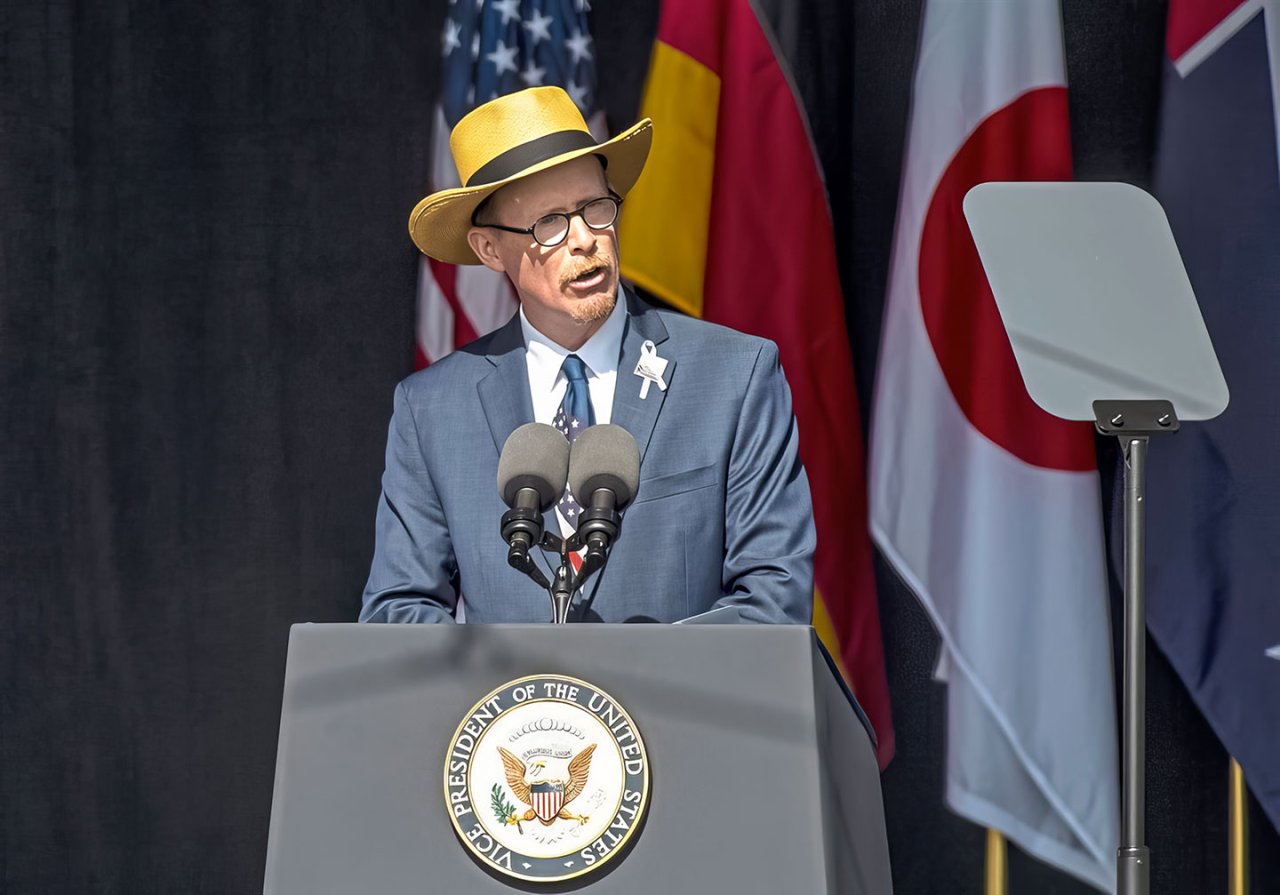
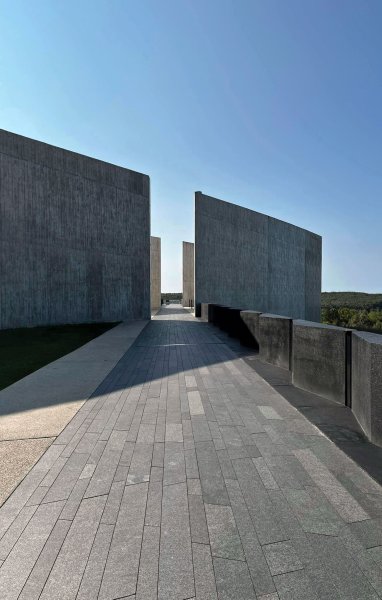
Gordon Felt '85 has spent more than two decades working to keep the memory of the Sept. 11, 2001 victims alive in the public conscience. As president of Families of Flight 93, he helped lead the creation of the Flight 93 National Memorial near Shanksville, Pennsylvania, delivered remarks at its dedication, accepted a Congressional Gold Medal on behalf of the passengers and crew, and received the Service Citizens Award from the U.S. Department of the Interior in 2015. He also spoke at the Tribeca Film Festival premiere of the film United 93 and testified before Congress on the memorial's progress. In addition, he spent 32 years as owner and executive director of Camp Northwood, a nationally recognized therapeutic residential program for neurodivergent children in the Adirondacks.
A Deeply Rooted Connection
Gordon's grandfather's construction company built OWU's Beeghly Library, Branch Rickey Field House, and the new science building. "Having walked those construction sites as a child, OWU felt like home long before I enrolled," he recalls.
The Summer Job That Became a Calling
Gordon arrived at OWU intending to follow his father into a law career, but a summer job working with neurodivergent kids at Camp Northwood shifted the trajectory of his life. He switched his major to elementary education, earned a master's in special education from Bank Street College of Education, and returned to Camp Northwood, this time staying for 38 years: first on staff, then as owner and executive director. Working with the campers, "I learned a fundamental truth about people: success is a product of environment, not just ability," he says. "I realized that my greatest passion wasn't just in the curriculum, but in creating a space where people feel they truly belong." His OWU education professor Amy McClure '72 reinforced that conviction— challenging him, he says, to bring "fierce advocacy" and nothing less than excellence to the lives of every student in his care.
 The Day the World Changed
On Sept. 11, 2001, United Airlines Flight 93 took off from Newark, New Jersey, bound for San Francisco. It never made it there. Hijackers turned the plane toward Washington, D.C. There were 40 passengers and crew members aboard, and through courage we can only imagine, they fought back. The plane crashed in a field near Shanksville, Pennsylvania.
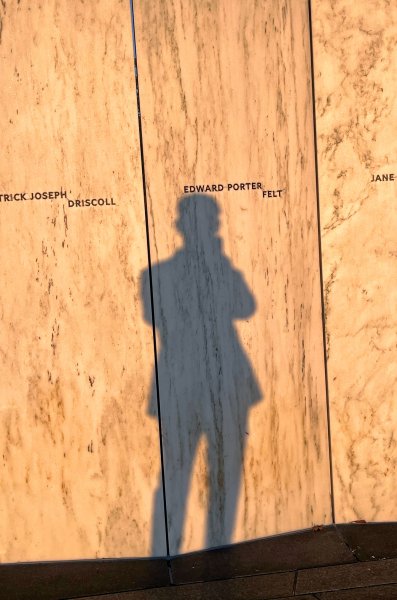
One of the passengers was Edward Felt—a 41-year-old computer engineer and technology director at BEA Systems, a husband and father of two daughters, from Matawan, New Jersey. He was on a last-minute business trip, and minutes before the plane went down, he called 911 from the plane and reported a hijacking in progress. The impact of the tragedy was imprinted on everyone with a TV or internet connection—especially Edward's brother, Gordon.
When Grief Becomes a Mission
The skills he cultivated at Northwood—patience, flexibility, and the ability to build a community in which struggling children can thrive—translated directly to what came after Sept. 11. "My grief and anger had the potential to be toxic if left unchecked. To protect my family and honor my brother, I pivoted toward fierce advocacy. This wasn't a career change in the traditional sense; it was a mission," Gordon says, adding that his background in education gave him the tools to collaborate, lead, and focus on memorializing the collective actions of the Flight 93 passengers and crew. "Over time, my relationship to that grief has evolved from a source of pain into a source of duty—a commitment to ensuring their story is told with the dignity it deserves," he says.
 "Would I Have the Courage to Do What They Did?"
In speaking with students and educators, Gordon says his "ultimate hope is that when they hear the story of Flight 93, they walk away asking themselves, 'If it were me, would I have the courage to do what they did?' The actions of those 40 heroes serve as a timeless call to service—motivating us all to step up when faced with challenges and choose what is right over what is easy."
Just a Starting Point
Gordon also tells students that when it comes to planning for a future, your intended path is often just a starting point. "Look for opportunities in the unexpected," he advises. "Success isn't about sticking to the first plan you made at age 19; it's about having the work ethic and courage to pursue a more fulfilling future when you find it."
 French & International Studies to Abstract Painter
Will Day '93
Founder, Will Day Art
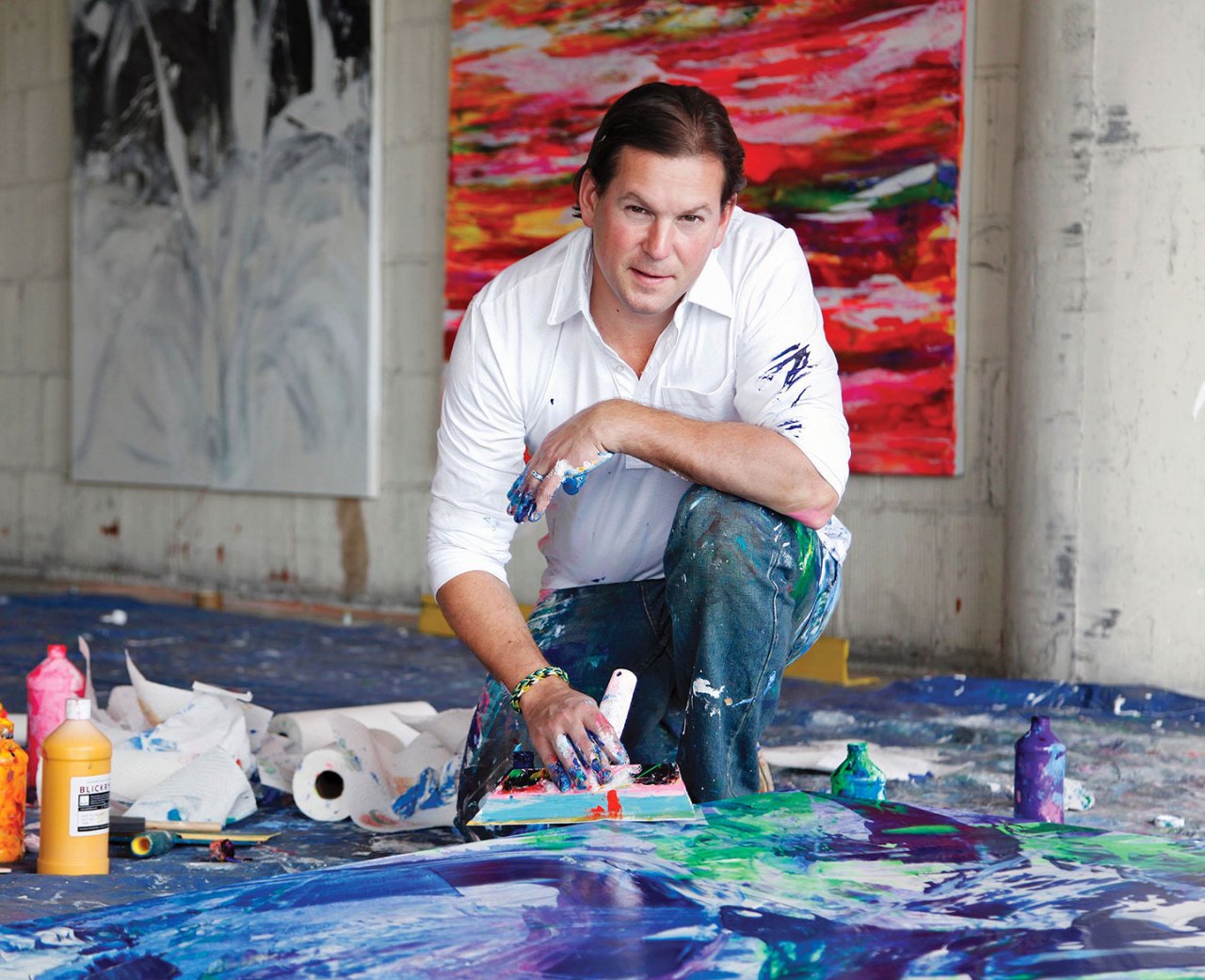
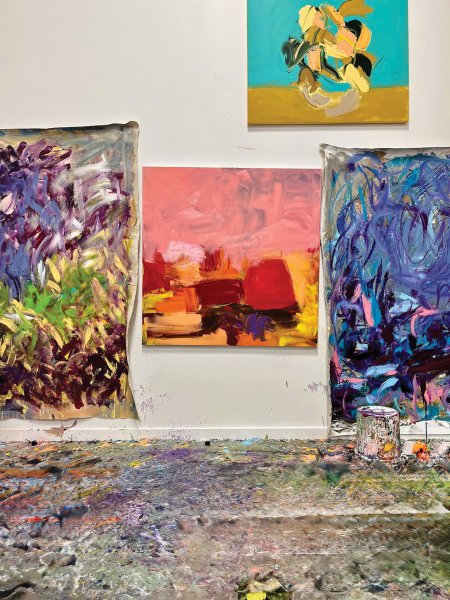
Will Day '93 majored in French and International Studies at OWU, served as a Peace Corps community development agent in Tunisia, worked on Wall Street, earned a master's in architecture from Pratt Institute, and worked at architecture firms in Los Angeles before committing full-time to abstract painting in 2008. He works out of a warehouse studio in downtown Boulder, Colorado, and his large-scale works have been exhibited domestically and internationally.
The Diplomat Who Wasn't
Will joined the Peace Corps first, serving as a community development agent in Tunisia. It was there, connecting with locals through painting murals and photography, that he first started thinking about art as something more than a hobby. After that, he landed on Wall Street. "Those years were a search for impact," Will says, "though I didn't yet realize how creativity would ultimately become the thread tying it all together."
A Profound Loss of Normalcy
On the morning of Sept. 11, 2001, Will, and his wife Aimee, were both working on Wall Street. Aimee worked on the 78th floor of the South Tower of the World Trade Center, but she wasn't in the building when the second plane hit. Others in her office were not so fortunate. "In the months that followed, we grappled with a profound loss of normalcy—fear, grief, and an urgent need to rebuild meaning," Will says. "I left finance and enrolled in a master's in architecture at Pratt Institute, drawn to its structure and creativity as a way to process the chaos and create something enduring." Architecture was fulfilling, but the pull toward painting kept growing. When a layoff hit in 2007, Will was ready to make the leap.
 Painting With a Plan
He started small—building an art inventory program, leasing his work to local businesses around Boulder, and leaning on family support. "It was a leap of faith, but one grounded in the realization that creating from chaos had always been my way forward," he says. "Over time, it grew into commissions, exhibitions, and a sustainable studio practice." In 2018, Will painted Peyton Manning for Mile High Stadium—an 8-by-7- foot abstract of the football star at the line of scrimmage, with the clock ticking and the crowd roaring. He titled it "Omaha."
No Straight Lines
Will credits Professor of Modern Romance Languages Margaret Fete with inspiring him to pursue the Peace Corps, and Kernan Robson Professor of Politics and Government Corinne Lyman with teaching him to see the world from multiple viewpoints. OWU first planted the seed, he says, "that there are no straight lines in life, which prepared me for a nonlinear path as an entrepreneur and artist." In a 2019 TEDxCU talk, he elaborated: Creativity emerges when you stop waiting for perfect conditions and instead treat chaos as raw material. "It's less a lightning bolt," he says, "and more a quiet conviction that chaos holds potential if you stay engaged."
 Religion & Psychology to Cookie Entrepreneur
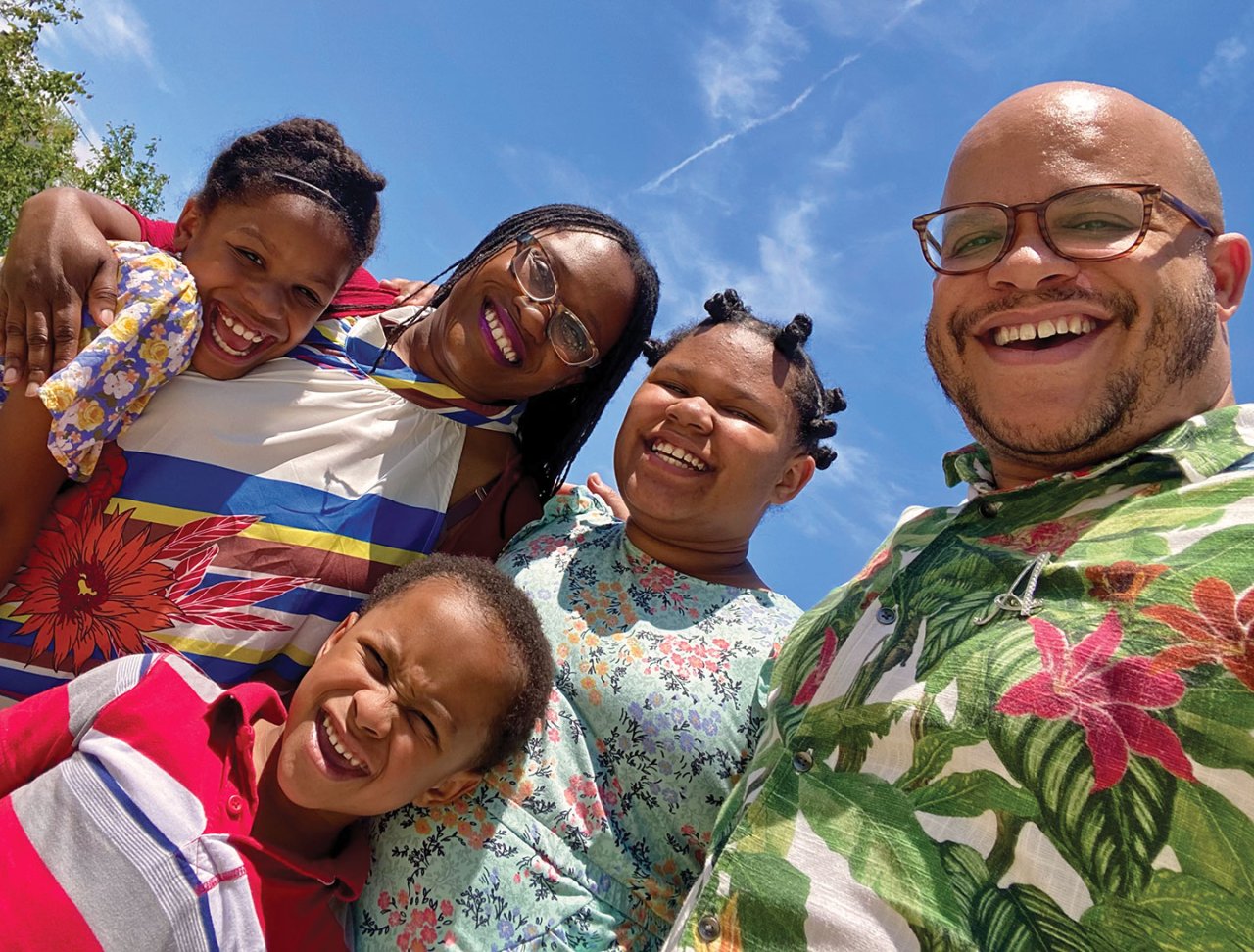
Khadija Adams '04
Founder, Deez Cookies
Khadija Adams '04 double-majored in religion and psychology at OWU, served as a campus minister and chaplain, and then worked for government agencies before launching Deez Cookies in 2020 from her front porch in Central Ohio—conceding, as she puts it, to the demand for her sought-after sweet potato chocolate chip cookies. A writer, justice advocate, and native New Orleanian, Khadija believes the stories we tell about food and the places they come from are as important as the food itself.
Callings and Cookies
Khadija came to OWU expecting to become a Christian psychologist. By graduation, she had made peace with something bigger: a religious calling, which led her to work as a director of student ministry at a small Presbyterian church in Pittsburgh, Pennsylvania. Cookies were originally a ministry tool—Khadija baked with teenagers to build trust, and happily refereed their flour fights in her apartment. When she eventually left ministry, she did temporary work for government agencies, but it left her soul unfulfilled. Throughout it all, she never stopped baking, and at gatherings, people often fought over her signature sweet potato chocolate chip cookies.
 Election Night, 2020
In the days after the U.S. presidential election, with no clear winner called, her phone started ringing. Friends were scared and they needed to "eat their feelings." "Get in the kitchen," they told her. "We'll pay you." She registered an LLC online— just for the day, she thought—and had people pick up their cookie orders from her porch. She agreed to bake until they called the election. It took days, and she baked 30 dozen cookies. Then she decided to keep going— through Thanksgiving, Christmas, the inauguration, Black History Month. By July 2021, she had quit her day job.
Storytelling Through Food
Khadija credits then-Assistant Director of Student Activities Jennifer Merrill, who worked with a campus ministry organization at OWU, as the person who held her up through loss, talked her through heartbreaks, and helped her make peace with being herself. And writing—honed at OWU—became the backbone of her business. "Storytelling through food is my thing," she says. "It's beautiful work. It's hard work. It's important to me."
Bridgebuilding, One Box at a Time
Khadija built her small-batch bakery, Deez Cookies, around a simple conviction: food tells stories, and the stories she tells center people and communities that deserve to be celebrated. Her menu reflects it—"Georgia on My Mind," a pecan crisp with peach coulis, was created in honor of Stacey Abrams, a politician, lawyer, and voting rights activist; "Ketanji's Cookie," a salted caramel brownie, earned a thank-you note from U.S. Supreme Court Justice Ketanji Brown Jackson herself. Boxes are curated around themes like Black History Month, Juneteenth, Hispanic Heritage Month, and women's history. The business has faced headwinds—Khadija acknowledges that recent corporate DEI pullbacks have cut into sales—but her resolve has only grown stronger. "Cookies are a bridgebuilding tool for us," she says. "And there are still bridges to build."
 Microbiology to Finance Professional
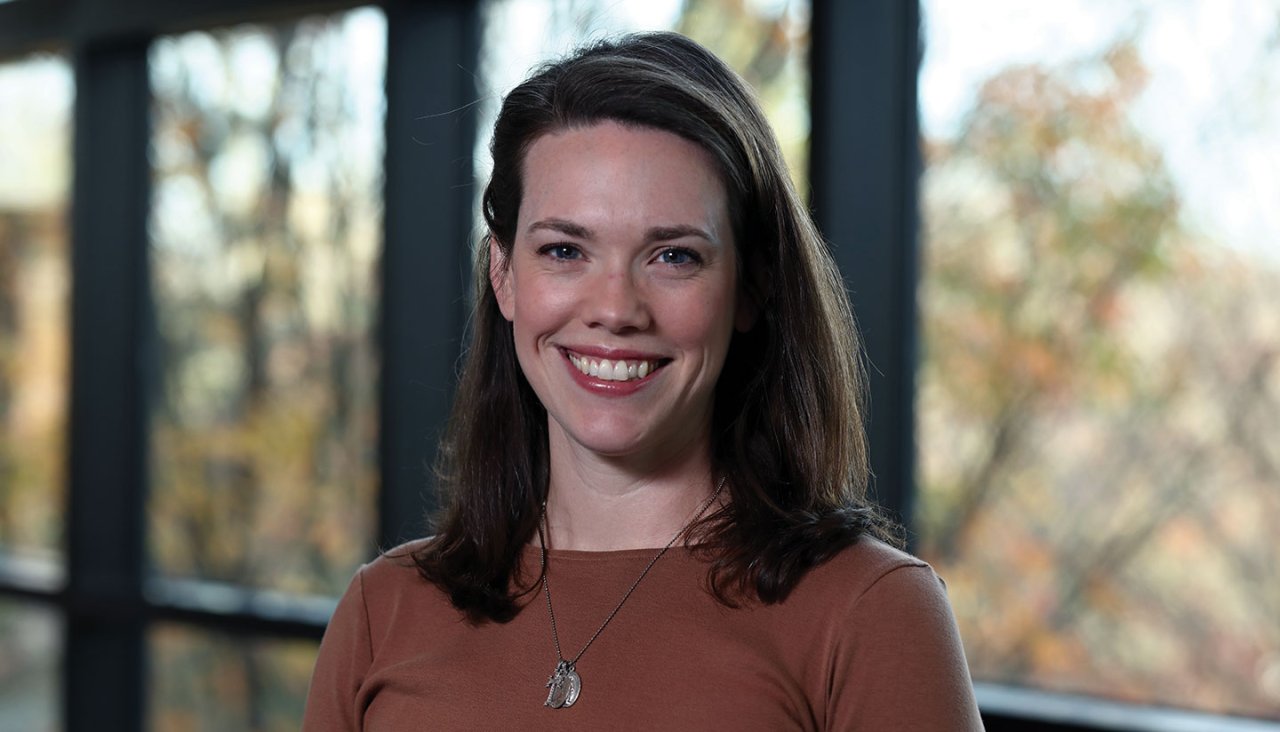
Sarah Cunningham Kahaian '12
Financial Advisor, Thrivent
Sarah Cunningham Kahaian '12 majored in microbiology at OWU, began her career as a microbiologist at Battelle Memorial Institute in Columbus, and eventually built a financial planning practice with her husband, Jack, through Thrivent, a faith-based financial services organization. She describes herself as a financial professional, scientist, and bibliophile—in that order, which is not necessarily the order she expected.
Passion vs. Purpose
Sarah arrived at OWU curious about science and left with a microbiology degree and plans to pursue a doctoral degree. When her graduate school plans fell through, she took a job as a microbiologist at Battelle Memorial Institute. Sarah loved the lab at Battelle, but "there is a significant difference between the enjoyment of learning about a subject and actually having a career based on that subject," she says.
An Unexpected Opportunity
Her husband, Jack, was also in the midst of a career change; he planned to open his own financial advising practice, and he recognized something in her she hadn't fully claimed: a talent for analysis, organization, and teaching others that his practice needed. He asked if she would be open to building it with him. She said yes.
Transferable Skills
Her science background turned out to be directly relevant to finance. Regulatory paperwork, documentation, methodical thinking—none of it was new. "I've found a parallel between writing experiment reports and offering ongoing financial advice," she says. "Both are taking big-picture goals and breaking them down into each step needed to arrive at the intended outcome." Experiments don't always go as expected, she adds, and neither does the stock market—or human behavior.
Above and Beyond
Sarah will never forget the lengths then-visiting assistant professor of physics and astronomy Greg Mack '02 went to when a scheduling conflict threatened to keep her from taking his cosmology course. Long before asynchronous learning was standard practice, he recorded his lectures onto a USB drive so she and another student could still participate and get credit. "His effort and genuine desire for us to access that course is something I still reflect upon," she says.
Purpose, Time, and Faith
At Thrivent, Sarah walks clients through a life values exercise that often reveals the same answers: family, health, faith, relationships. "Thrivent emphasizes that wealth isn't just about money; it's about purpose, time, and faith," she says. "Though we work with investments and insurance, we are really talking about something deeper than that." Her advice to current students: "Take the class outside your comfort zone—Shakespeare, ceramics, astronomy. Education isn't just job training; it is the gift of culture. Your path has more to do with your character and your relationships than your career—and it certainly isn't set in stone."
 Theatre to Seminary President
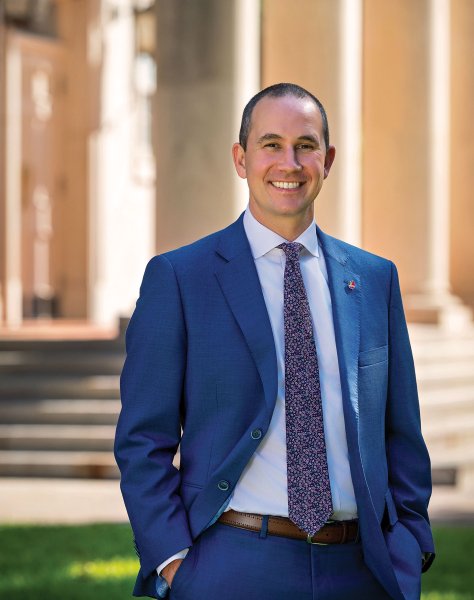
Stephen Cady '01
President, Brite Divinity School, Texas Christian University
The Rev. Dr. Stephen Cady '01 majored in theatre at OWU, earned an M.Div. from Garrett-Evangelical Theological Seminary and a doctorate in practical theology from Princeton Theological Seminary. Before he was named president of Brite Divinity School at Texas Christian University in Fort Worth, Texas, Stephen served for 12 years as senior minister of Asbury First United Methodist Church in Rochester, New York, a Reconciling Congregation of more than 2,300 members dedicated to outreach and social justice.
The CD-ROM
When he was in high school in Olathe, Kansas, Stephen wasn't sure how to choose, or even identify, the right college for him. No one else in his family had been to college, but he knew he wanted to study theatre and that he was a United Methodist. The internet was in its infancy, so he went to the school counseling office, sat down at a computer, slid in a college search CD-ROM and checked two boxes: theatre and Methodist. "OWU popped up alongside a handful of other schools and I wrote to each," he says. "OWU sent me information right away and followed up with a call. It was the only school to which I applied and—to this day—the best decision I ever made. It was also the place where I met my wife and partner in ministry, Emily Hill Cady '01."
Bound for the Spotlight
At OWU, Stephen pursued the performing arts with clear-eyed determination. "I was convinced that I was going to be an actor, and was barreling headlong into that profession," he says. "When I graduated, I had a job at a theatre company in Florida and was absolutely certain that I had earned my last degree." As it turned out, he never acted in Florida and now has a doctorate. Though he cared deeply about his faith and the inclusive and open church in which he had been raised, ministry was not yet on his radar.
A Gift of Grace
Between his junior and senior years at OWU, Stephen found himself $1,200 short of what he needed to return for his final year. His father had lost his job and the money he'd saved over the summer had gone to help his family keep their home. He called now-professor emeritus of English Dennis Prindle—for whom he worked as a student assistant on the Sagan National Colloquium— to say he wouldn't be coming back. "Dr. Prindle paused after I told him the news and without judgment or condescension offered a simple solution," Stephen recalls. Prindle would give him the money; Stephen would pay it back over the semester from his student assistantship paychecks. "It was likely against a thousand university policies, but without that gift of grace, I don't know where I'd be today."
Lessons From the Stage
It turns out, Stephen says, that a theatre degree was perhaps the best preparation he could have had for a life in ministry. "Yes, it helps to know how to speak publicly," he says. "More importantly, though, the gift of any artistic pursuit—including theatre —is that it forces you to pay attention to other human beings, and to care enough to connect with them." He adds, "I come back to the lessons I learned in the theatre department at OWU over and over and over again."
The Next Generation
One of Stephen's three children, Ellie Cady '29, is currently swimming, performing in musicals, and strolling down the JAYwalk at OWU. "Watching Ellie navigate that same campus is a gift that will last a lifetime," he says. "It reminds me of how quickly life goes. We were only at OWU for four years, but it has been with us ever since."
Divine Irony
Stephen shares that the lowest grade he ever received at OWU—a C—was in a religion class. He now runs a divinity school. He deserved the C, he says, and it wasn't the end of the world.
By Elizabeth Weinstein