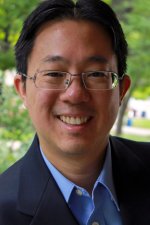
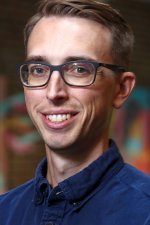
[Feb. 21] behind the scenes: The Classroom

Faculty-led Mock Classes during Admitted Student Day!

From 10:15  - 11:05 a.m., capture the feel of a typical OWU class—engaging, interactive, and discussion-driven—with absolutely no quizzes or tests!

If you're not sure which class matches your interests, talk to an admissions representative, and we will direct you accordingly. You don't have to be locked into an academic area to attend a mock class; just pick any one that interests you.

Supporters (parents, families, and guests) should head to the Hamilton-Williams Campus Center Benes Rooms for a special Alumni panel session.

7 Things You Never Knew Accountants Could Do

Eric Nauman, Assistant Professor of Accounting
R.W. Corns Building, Room 312

We will explore seven career options within accounting that most students don't think are options.  We'll look at everything from fighting crime to managing professional sports rosters.

Behavior and Genetics of Domesticated Animals

Shala Hankison, Associate Professor of Biological Sciences
Schimmel Conrades Science Center, Room 228

What can science tell us about why our pets are amazing but so very different? Charles Darwin struggled with understanding domestication, the process of a wild organism becoming adapted to live alongside humans. This class will highlight the ongoing studies and genetic advances that have allowed us to more deeply understand domesticated animals.

The Lives of the Stars

Bob Harmon, Professor of Physics and Astronomy
Schimmel Conrades Science Center, Room 161

Our Sun is a giant thermonuclear fusion reactor, getting the energy by which it shines from the fusion of hydrogen into helium in its core. It has been doing this for about four and a half billion years now, but its supply of hydrogen fuel in its core won't last forever. When it runs out in about five billion years, the Sun will switch to furiously fusing hydrogen in a thin shell surrounding the core, which will cause the Sun to swell up and become a red giant a hundred times larger and several thousand times brighter than it is at present! And that will be just the beginning of the end for the Sun. We'll trace the further chapters in the Sun's story until it leaves behind its final remnant, a white dwarf that is its burnt-out core, a teaspoon of which would have the mass of a delivery truck. Then we'll see how more massive stars end their lives with titanic supernova explosions that leave behind neutron stars or even black holes!

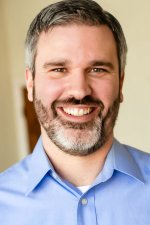
The Problem of Personal Identity

Erin Flynn, Professor of Philosophy and Religion
Merrick Hall, Room 203

This class will introduce philosophical theories of personal identity -- that is, how might we account for the apparent fact that an individual person is one and the same person through time?

Saving the Miracle: 'Dos Oruguitas' as the dramatic centerpiece of Disney's Encanto

Frank Chiou, Associate Professor of Performing Arts
Merrick Hall, Room 202

This talk discusses the song "Dos Oruguitas" and the important role it plays as the intergenerational trauma of the Madrigal family is revealed, allowing Mirabel to understand how to begin the healing.

Why am I so STRESSED? How hormones make us miserable, but also keep us alive.

Dustin Reichard, Associate Professor of Biological Sciences
Schimmel Conrades Science Center, Room 151

Stress is unavoidable. It can make us miserable. But, is it actually a good thing? In this lecture, we will explore how hormones manage the body's response to stress, whether that's being chased by a lion, worrying about a big test, or agonizing over what to share on your socials.