We visited W.E.B. DuBois's former home to learn about his legacy as a Pan-Africanist in Ghana. DuBois's career as an activist and founder of the NAACP exposed him to different philosophies that influenced his perspectives throughout his life. DuBois's experience as an African American man in the Reconstruction Era is most clearly described in his 1903 work, The Souls of Black Folk. DuBois's work remains a classic in Africana Studies.
Eventually, DuBois left the United States and moved to Ghana, where he worked to build solidarity between Africans and the African Diaspora with his long-time friend, President Kwame Nkrumah. One of his projects, Africana: The Encyclopedia of the African and the African American Experience, aims to chronicle the shared history of the African Diaspora.
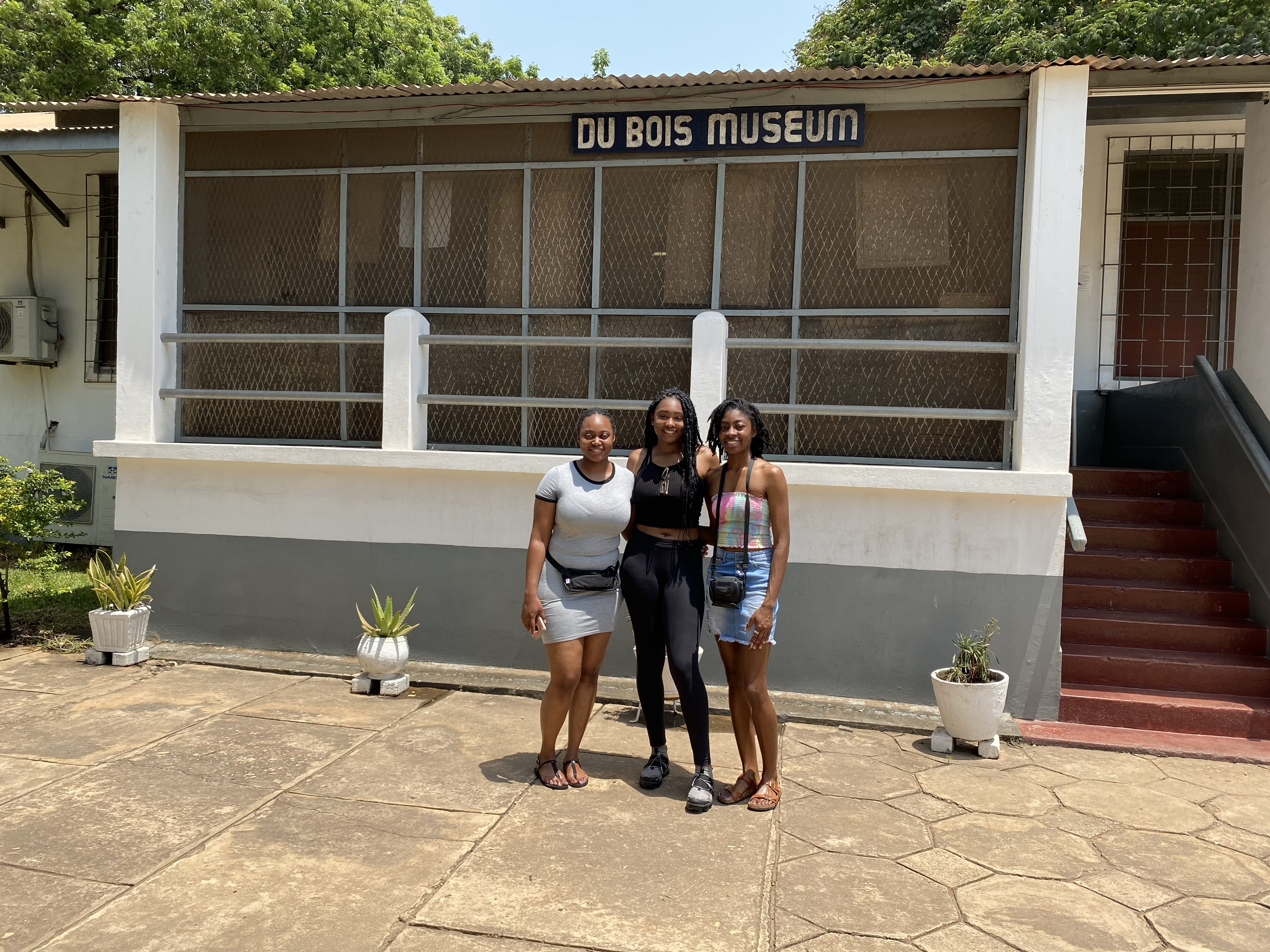
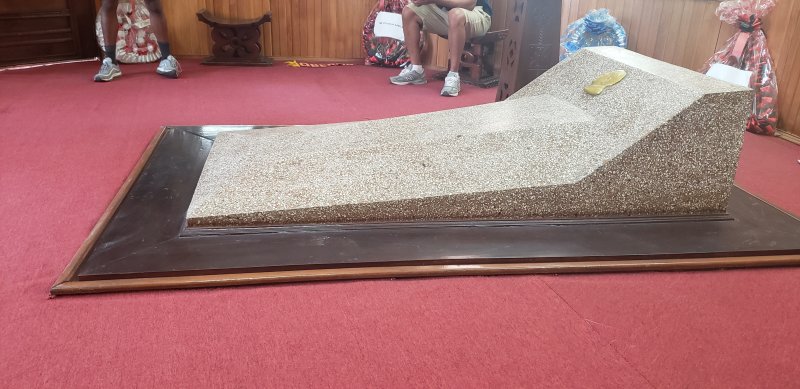
DuBois's house in Ghana has been converted to a museum for public viewing. Shown below are several photos of DuBois's house and burial site:
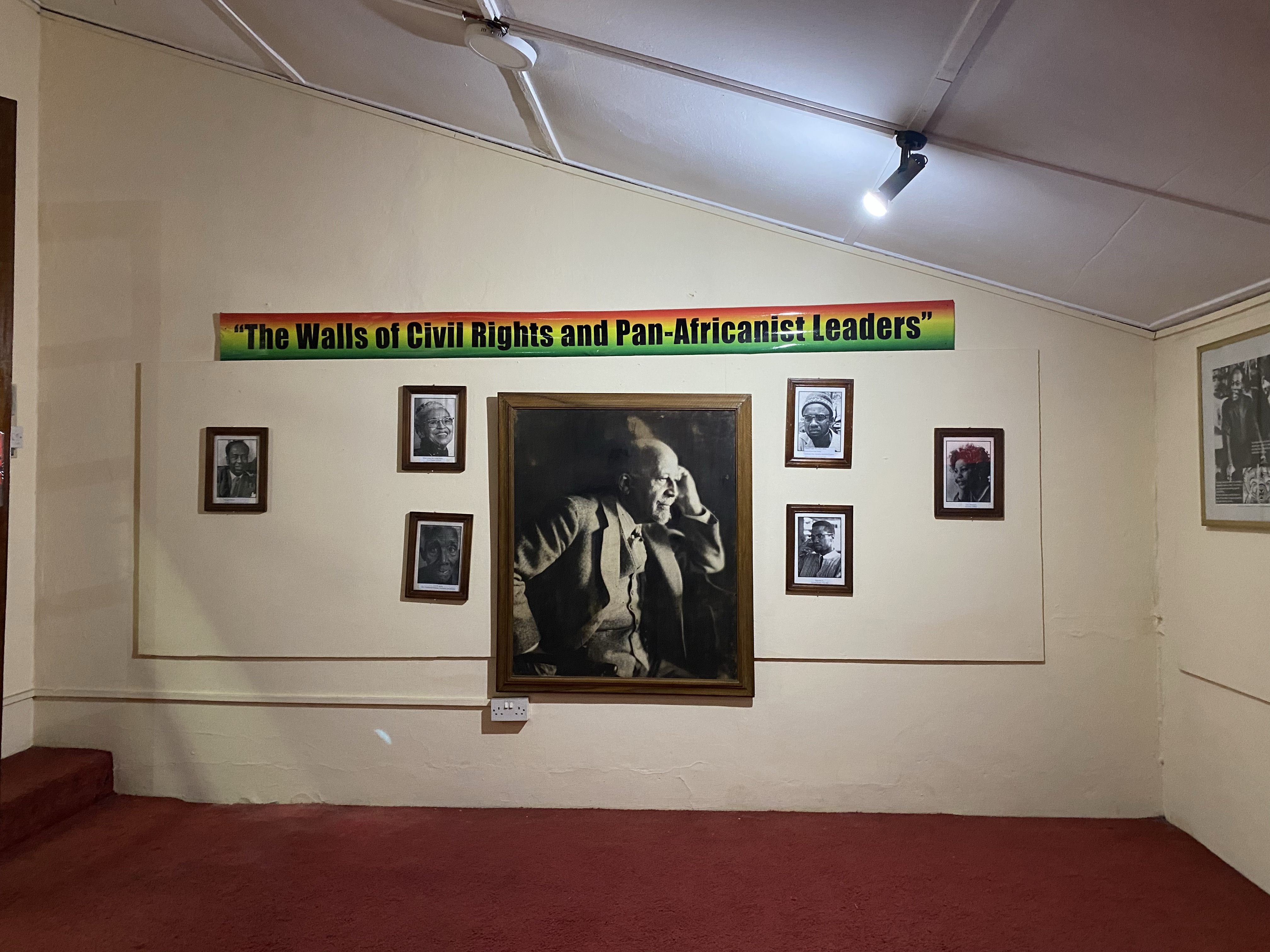
Outside W.E.B. Dubois house. (left to right: Paris Norman, Keionna Badie, Tiffany Moore)DuBois rests peacefully in a building separate from his home. Inside the building, paintings of DuBois and Kwame Nkrumah hang on the walls, HBCU flags lie on the floor, and the ceiling is decorated to resemble a spider's web. In Ghana, the spider's web is a symbol of wisdom. This wall stands in the dinning room of W.E.B. Dubois home. All of the walls in this room are covered with headshots of other civil rights and pan Africanist leaders.